Do’s and Don’ts for entering, moving, and offering within sacred temple space
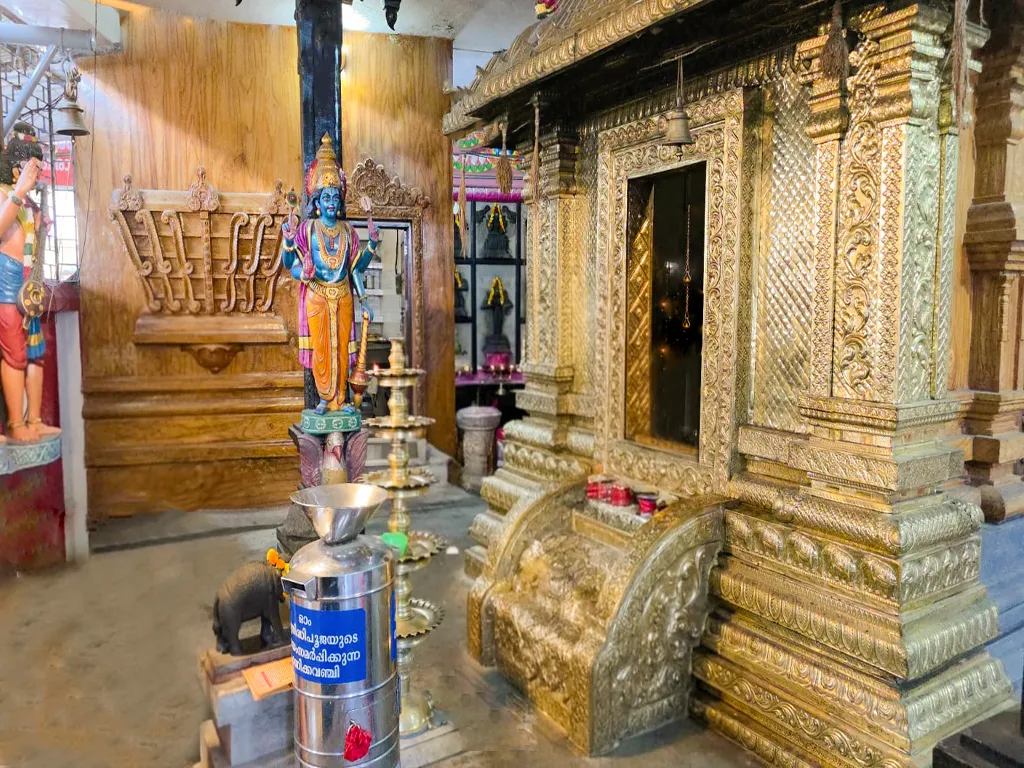
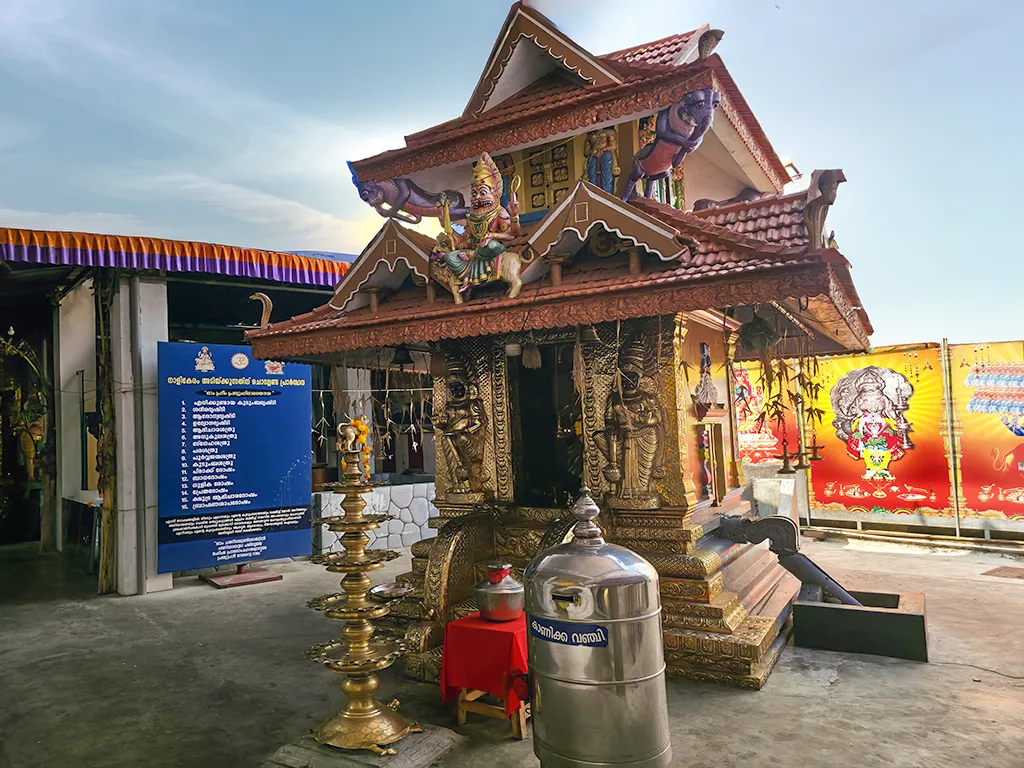
Every space has energy. This space holds presence; quiet, steady, aware. What enters with you becomes part of the offering: words, emotions, silence, breath. The sanctum doesn’t require you to be perfect, only sincere. These guidelines are invitations to walk with reverence, to let your body, voice, and attention move slower. The Devi is already aware of you. As you approach, bring yourself inward. Let outer movement match inner stillness. Step in with the awareness that you are already being seen. Then, each moment here becomes more than a visit; it becomes a sacred participation in something ancient and alive.
Offer With Intention
Make every offering reflect what truly matters within you.
Prayerful Conduct
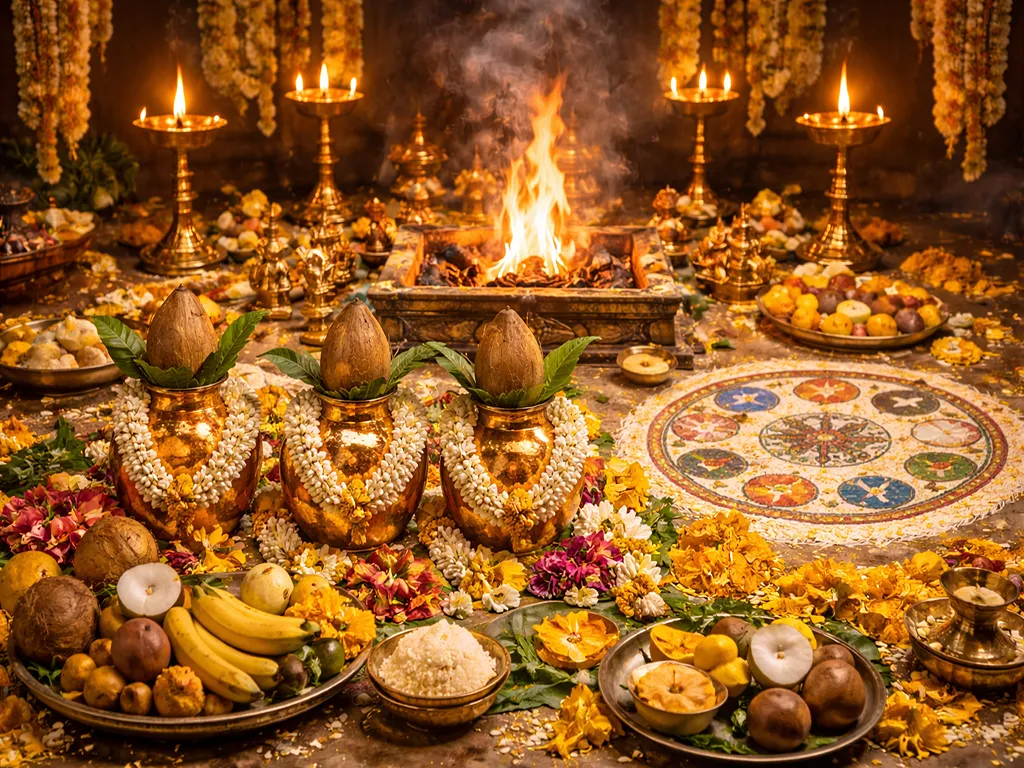
Bring the offering after you have stilled your thoughts. Whether it is a flower, lamp, or coconut, let it rise from clarity; not habit. Offer as if the Devi is already listening. Your sincerity, not the item; carries your prayer forward. The ritual begins in the mind, not in the hand. If it comes from your core, it will reach hers. Give slowly. Know what you are asking. Let your hand and heart align in one single gesture.
Missteps to Avoid
Do not bring anything simply because it is expected. Ritual performed without awareness is weightless. A coconut broken in distraction remains unoffered in spirit. Avoid offering out of fear, comparison, or compulsion. The Devi does not measure the size of what you bring; she listens to the intention behind it. A rushed ritual may satisfy a schedule, but not a prayer. What you give with hesitation or noise rarely enters sacred space.
Respect Sacred Silence
Let your presence be part of the prayer; not above it.
Prayerful Conduct
The space within the temple is alive with soundlessness. Each silence here is filled with breath, presence, and the subtle stir of devotion. Choose words sparingly and steps softly. Allow your silence to become part of the offering. Even without a mantra, stillness itself becomes sacred. Respect those beside you who are praying in quiet ways. Sacred silence is not emptiness; it is the doorway through which understanding enters. Let it surround and speak to you.
Missteps to Avoid
Don’t break the sanctity of space with unnecessary conversation, loud movement, or scattered sound. Noise is not neutral; it leaves residue. Chatter or careless laughter carries energy that doesn’t settle quickly. Refrain from using the temple as a place to discuss, instruct, or distract. Every voice competes with inner stillness. Don’t let yours disturb it. You are not alone in prayer. Let your silence make room for others to enter devotion without disruption.
Pause Before Entering
Cross the threshold as if crossing into sacred awareness.
Prayerful Conduct
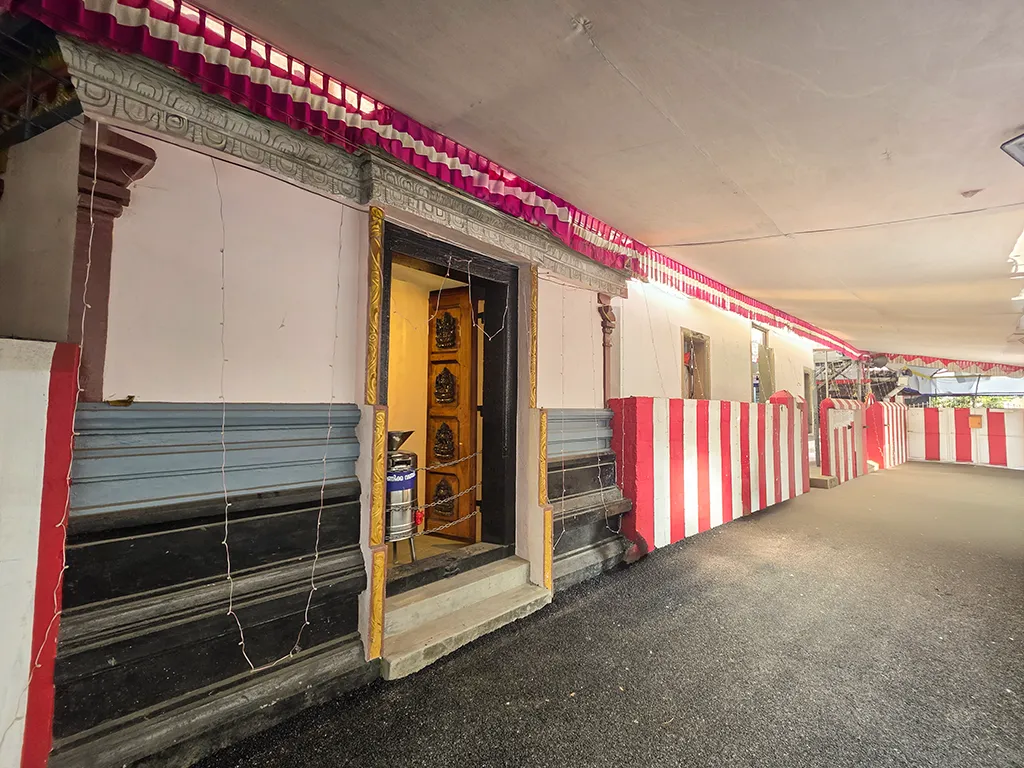
Pause, even if just for a breath. Let the body slow and the mind settle. You are not entering a building; you are entering a space that listens. The threshold is not simply wood or stone; it is the divide between everyday attention and sacred presence. Set your distractions down. Let your inner gaze turn toward the Devi before your feet cross the gate. Prepare, not just your hands, but your spirit. That pause invites the divine to receive you completely.
Missteps to Avoid
Do not walk into the temple unconsciously. Your body may enter, but your attention may remain behind. Presence is the requirement; not perfection. If you carry haste, anxiety, or unresolved emotion, pause outside. A sacred space responds to what enters it. When you rush in without awareness, the depth of experience narrows. You aren’t being judged; but you’re being met. Make sure it’s your true self arriving. Don’t bypass the moment that prepares you for everything else.
Follow Ritual Flow
Let the temple’s rhythm carry your prayer, not interrupt it.
Prayerful Conduct
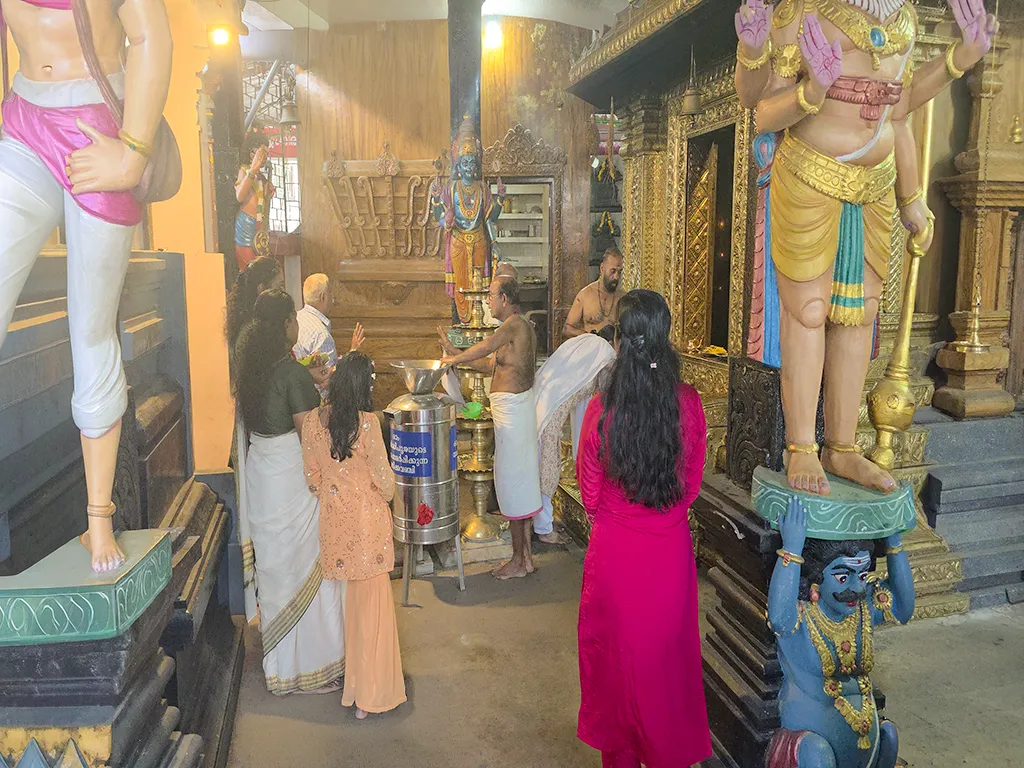
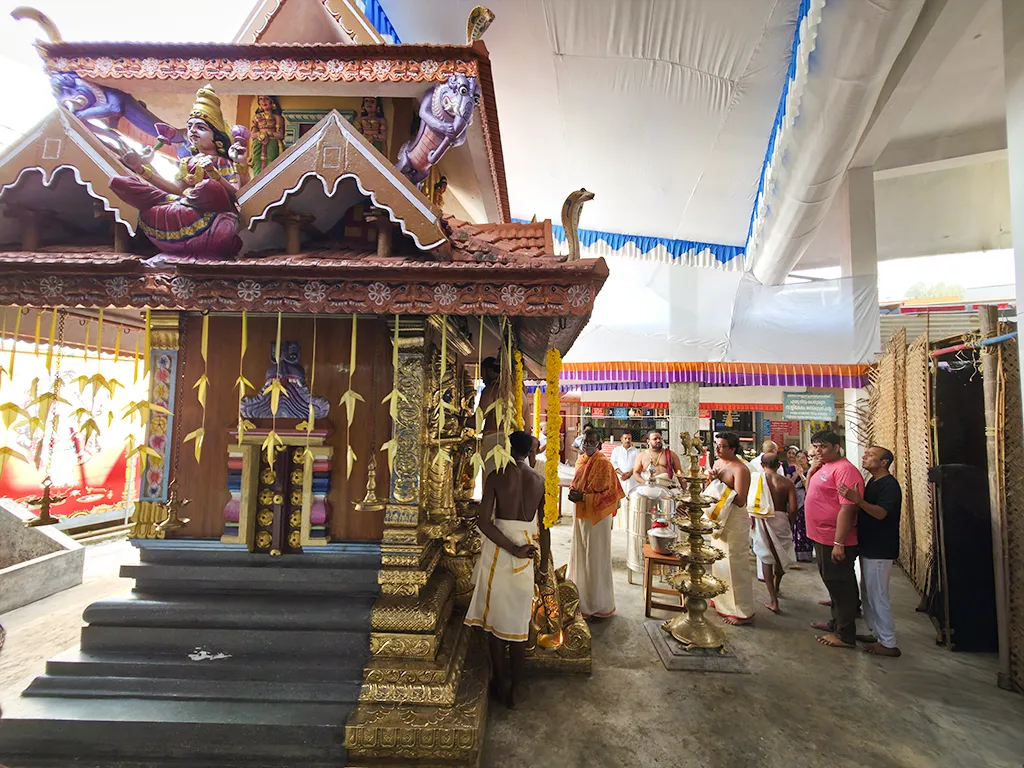
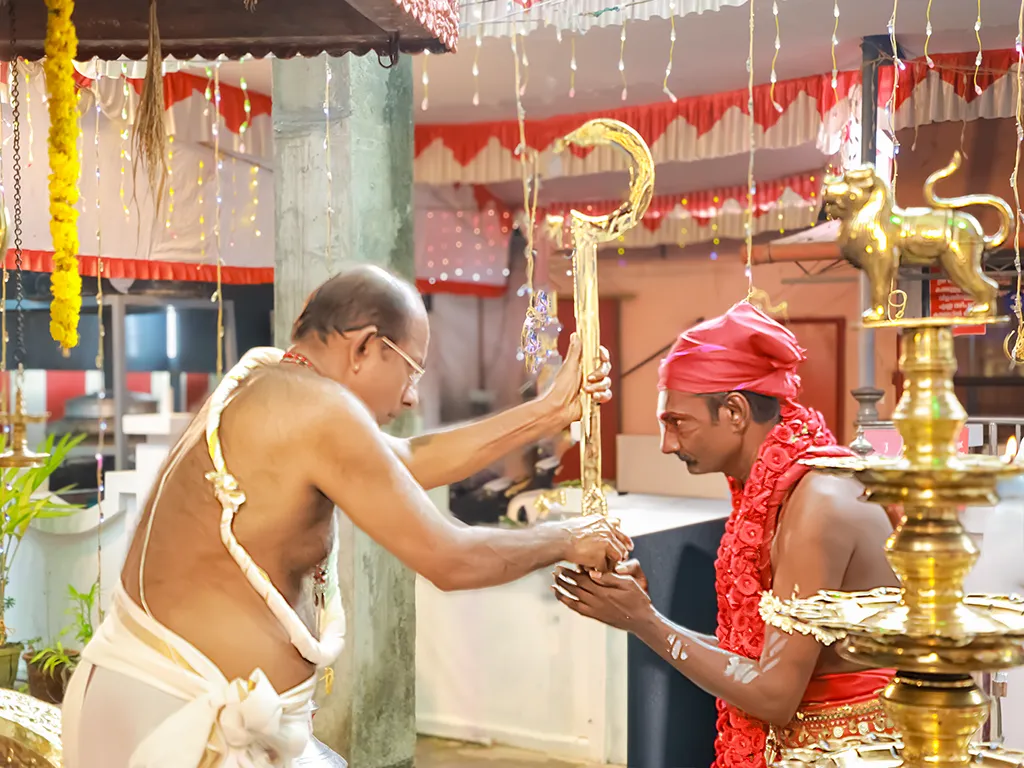
Every ritual has an unseen architecture. From the priest’s gestures to the placement of fire, water, and mantra, all move in sacred alignment. Observe, wait, and allow yourself to be shaped by it. Ritual is not something to direct; it is something to receive. When unsure, be still. When moved, bow. Let your body follow the cue of devotion rather than dictate it. Let the temple show you the pace, the purpose, and the path.
Missteps to Avoid
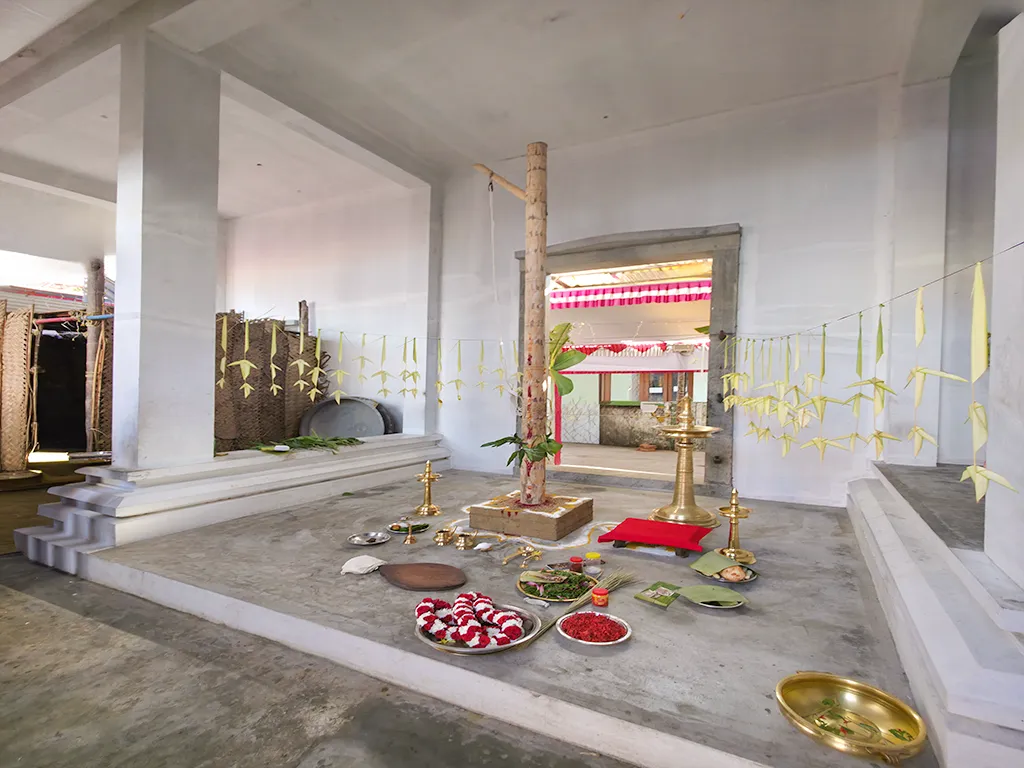
Don’t step over homam spaces, interrupt offerings, or attempt to alter flow. These actions may seem small, but they shift energy meant for something greater. Sacredness depends on uninterrupted rhythm. The priest’s movement, the deepam’s flame, the sequence of offerings, they are not aesthetic. They are precise. Avoid inserting yourself where you haven’t been invited. A ritual is not complete if disturbed. Let your presence blend, not break; the design of the divine.
SACRED HOMAM OFFERED
0+
ONE COCONUT RITUAL
0+
POOJAS AT TEMPLE
0+
Avoid Uninvited Touch
Let reverence guide your hands before curiosity does.
Prayerful Conduct
Keep your hands folded or relaxed unless guidance is given. Sacred objects are prepared through mantra, discipline, and intention. When you wait to be offered prasad or blessings, you allow the ritual to complete its work. Reverence grows through restraint. Observe how priests handle vessels and lamps. Learn by watching. Touch, when invited, becomes meaningful. Distance, when respected, becomes devotion. The sacred approaches you when you remain receptive, not when you reach prematurely.
Missteps to Avoid
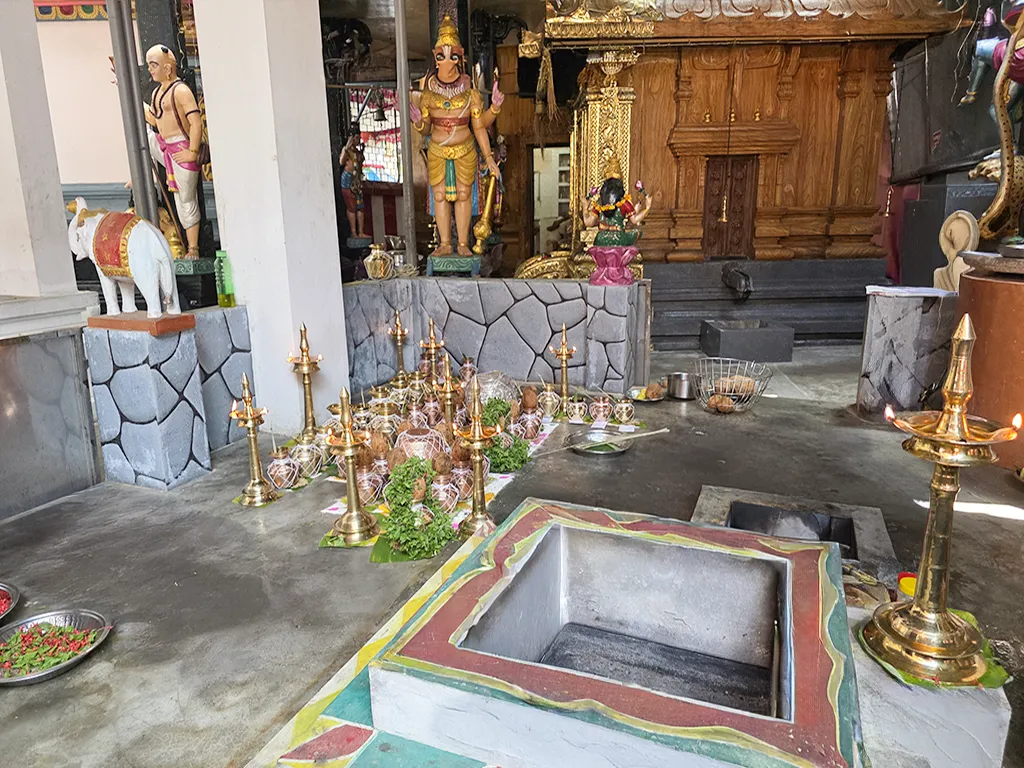
Do not touch lamps, garlands, vessels, or offerings casually. Familiarity breaks sanctity. Even well‑intended touch can disrupt the energetic preparation of ritual items. Avoid correcting, rearranging, or handling anything unless instructed. The temple is not a place to explore objects physically. Let your curiosity remain inward. Sacredness weakens when boundaries are crossed without awareness. Respect shown through restraint preserves the depth of every ritual taking place around you.
Do Not Photograph
Choose presence over proof, memory over capture.
Prayerful Conduct
Let your eyes and awareness receive the sanctum fully. What you witness with attention stays longer than what you record. The flame, the silence, the deity’s gaze; these are meant for inner keeping. Allow the experience to imprint itself on you without interruption. When you remain fully present, remembrance becomes natural. The temple offers something that cannot be replayed. Receive it completely, without dividing your attention between devotion and documentation.
Missteps to Avoid
Do not use phones or cameras inside ritual spaces. Photography fragments attention and disturbs shared sanctity. It pulls you out of prayer and distracts others who are seeking stillness. The sanctum is not a scene to frame. Avoid even discreet attempts. Once the mind shifts to capturing, the moment dissolves. Sacred experiences ask for participation, not recording. Let what happens here remain undisturbed and whole.
Walk With Awareness
Let movement reflect the same care as prayer.
Prayerful Conduct
Move slowly and consciously within the temple. Every step here carries intention. Walk as if the space itself is listening. Awareness in movement calms the mind and prepares the heart. When you walk with steadiness, even transitions between places become prayer. Let your body reflect the reverence you hold inwardly. Simple acts; turning, stepping aside, waiting; gain meaning when done without haste.
Missteps to Avoid
Do not rush, cut across spaces, or walk distracted. Speed carries restlessness. When the body moves too fast, attention scatters. Avoid treating the temple as a passageway. Movement without awareness breaks the quiet continuity of devotion. Even necessary walking can be done gently. If you must move, do so consciously. Let the body remain aligned with the sacredness of the space you are moving through.
Don’t Carry Conflict
Enter with what you wish the divine to hold.
Prayerful Conduct
Arrive with openness, even if life feels heavy. Pause and let agitation soften before entry. The temple receives what you bring, so bring what you want blessed. Silence helps release tension. A calm breath can reset inner noise. When you enter with humility, the space responds. Peace is not demanded; it is cultivated. Begin that cultivation at the gate, before stepping inward.
Missteps to Avoid
Avoid entering with anger, complaint, or agitation. Unsettled emotion spreads quickly in sacred space. Arguments, frustration, or loud expression disturb not only your prayer, but others’ too. The temple is not a place to process conflict outwardly. If emotions feel strong, pause outside. Settle first. What you carry in becomes part of the offering; choose carefully what you place before the divine.
Feel What Arises
Allow the temple to speak through inner movement.
Prayerful Conduct
Stay present to what shifts inside you. Sensations, thoughts, emotions may rise quietly. Give them space. The divine often responds subtly, not dramatically. Sit longer if needed. Let awareness deepen. What arises here is part of your prayer being answered. Trust the experience without needing explanation. Stillness allows meaning to surface naturally. Listening inwardly is as important as any outward ritual.
Missteps to Avoid
Do not dismiss inner responses or rush away immediately. Some changes take a moment to register. Avoid judging what you feel or expecting a specific outcome. Sacred responses are personal and often understated. Leaving too quickly may interrupt understanding. Allow time for integration. The temple does not always speak loudly. Do not overlook what arrives softly and continues quietly afterward.
After You’ve Been Seen
What you experienced does not stay behind. The stillness you felt, the clarity that rose, the release that softened; these remain with you, if you allow them. Carry them into your next action, your next word, your next decision. You walked in with offerings. You walk out with presence. Let that shape how you move in the world. These reminders are not restrictions. They are a way to hold what you just received. Wherever you go, take this steadiness with you. That is how Devi continues; through your living, through your choices, through your care.